Make a cabinet latch part of a storage decision
A cabinet latch is useful only within a complete plan for what is stored, how the device fits and whether adults reliably reclose it. Choose the actual storage boundary before shopping for a lock. A package labeled childproof should not become permission to leave hazardous products in an otherwise accessible arrangement.
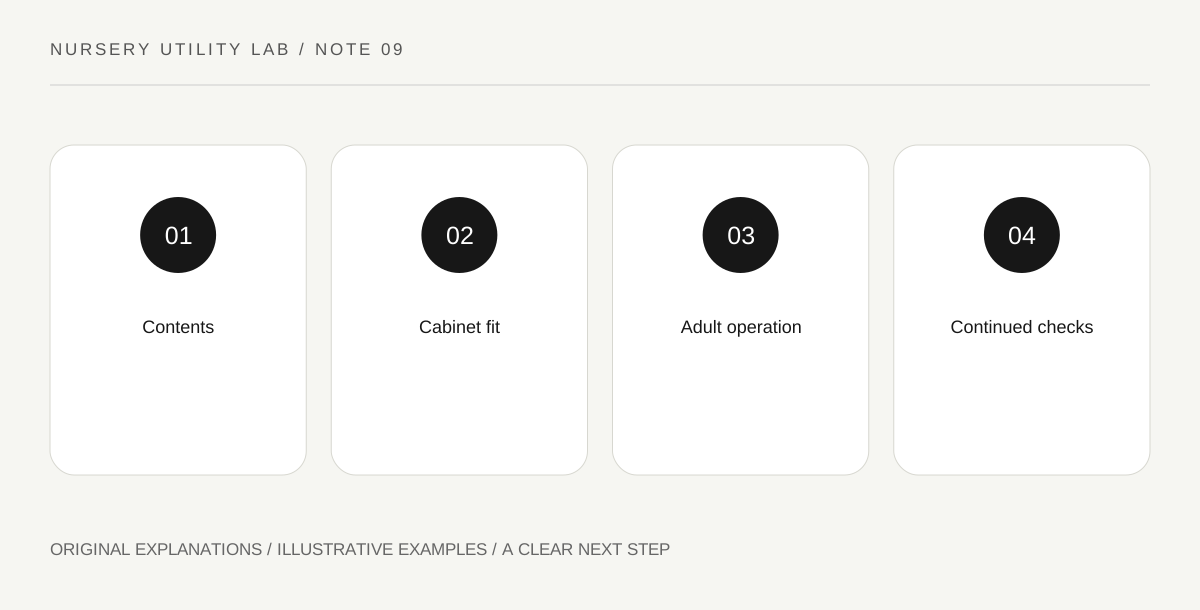
Original explanatory diagram. Read the full method and limitations below.
Start with the cabinet's contents
List medicines, cleaners, sharp objects and other hazardous items in areas a child may access. CPSC identifies cabinet latches and locks as tools for reducing access to these hazards. Decide what needs secure storage and whether the current cabinet is an appropriate location. Avoid turning the nursery drawer into a mixed supply box containing both baby clothing and adult medicines. A latch should reinforce an intentional boundary, not disguise an arrangement nobody has reviewed.
Match the device to the actual doors
A double-door cupboard, a single hinged door and a drawer may need different devices. Read installation and use instructions for the chosen latch, including the relevant materials and attachment conditions. Do not assume an adhesive device works on every finish or that a shared brand means parts are interchangeable. If the product cannot be installed as directed, choose another suitable arrangement. A closed-looking door should not be counted as secured merely because a plastic piece is visible nearby.
Check adult operation without teaching a child
Adults who use the storage need to understand opening and reclosing the device correctly. Review it while the child is elsewhere rather than repeatedly demonstrating the release as entertainment. A convenient access method is valuable if it encourages consistent use, but convenience cannot override the intended security. Keep any release tool appropriately inaccessible. Tell another caregiver which cabinet needs this action so they do not unintentionally leave it unsecured after retrieving an ordinary household item.
Review adhesion, fit and habits
Follow the device's inspection and replacement instructions. Cleaning, moving a door or changing a handle can affect the arrangement. A failed latch requires an immediate storage response while repair or replacement is resolved. Do not wait for the next shopping trip with the same hazardous contents accessible. If a child can operate the device, reconsider the boundary promptly. No device removes adult responsibility for safe storage, and a label claiming protection does not prove it remains effective after damage or unsuitable installation.
Illustrative worked example
Illustrative cupboard plan: A family separates household cleaning supplies from everyday cloths and selects an appropriate locked storage arrangement. All adults learn how to reclose it. When an attachment loosens, the hazardous products are moved to secure storage while the device is replaced according to instructions. The example does not endorse an adhesive, certify a brand or claim that one latch makes a room safe.
Questions that come up
Does fitting a latch replace secure storage choices?
No. The device belongs within a storage plan. Keep hazardous products appropriately inaccessible and review both the contents and the closure.
Can every adult use a different way to keep it shut?
Use the instructed mechanism consistently. An improvised knot, loose clip or partly engaged latch does not establish the same arrangement.
References and scope
These sources support the factual background. Examples and exercises are original illustrative teaching material. References do not imply endorsement.
- CPSC: Childproofing devices — Cabinet locks and suitable outlet covers; installation and continued checks.