Distinguish a window screen from a fall-prevention device
A window screen serves a different purpose from a suitable window guard or opening stop. CPSC warns families never to depend on screens to prevent children falling. When preparing a nursery, decide how the actual window will be used and protected while preserving appropriate emergency escape arrangements.
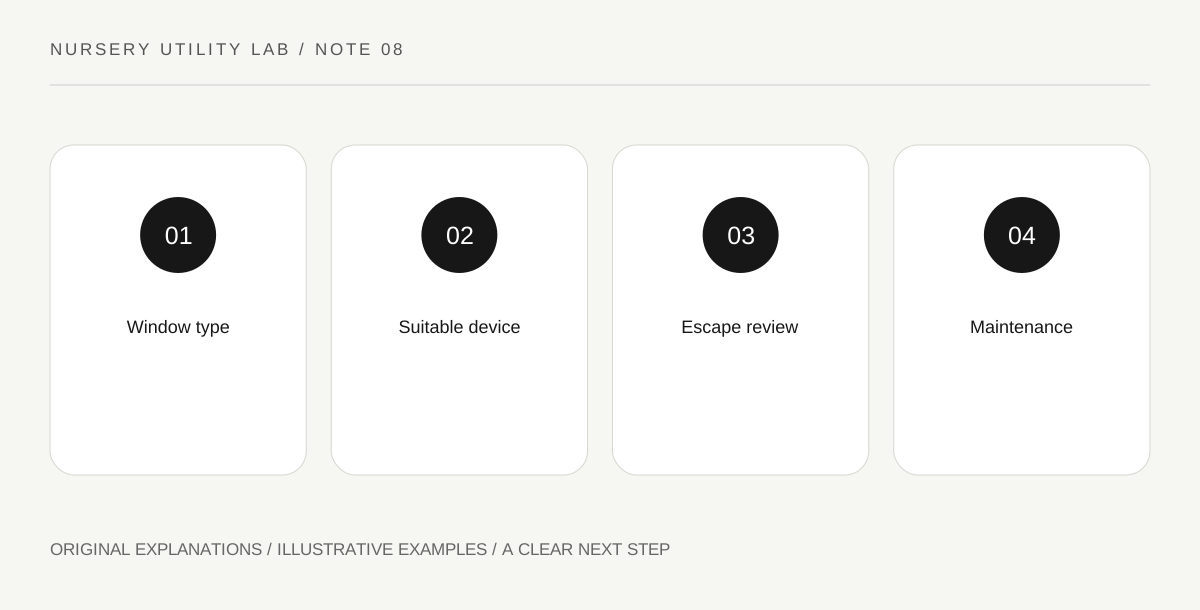
Original explanatory diagram. Read the full method and limitations below.
Describe the actual window movement
Identify whether the window slides upward, sideways or opens another way. Record the opening that becomes accessible during normal ventilation. A purchase based only on the frame's width can overlook how the product must attach and what part of the window moves. Keep children away while reviewing the arrangement. A screen that remains in place under a light adult touch should not be treated as evidence that it will restrain a child.
Select the appropriate guard or stop with help
CPSC discusses window guards and stops that limit an opening to no more than four inches. Use a suitable product for the actual window and follow its instructions. If selection or attachment is unclear, obtain qualified installation advice. Do not improvise a restraint from a rope, furniture wedge or decorative grille. A product name does not establish compatibility with every frame or opening direction, and a poor fit should not be hidden by curtains.
Keep emergency escape in the decision
Fall prevention should not create an unexamined escape obstruction. CPSC's window guidance includes the ability for adults and older children to open appropriate guards for fire escape in specified circumstances. Ask a qualified provider about local requirements and the room's actual escape arrangements. Do not copy a permanent barrier from another building without that assessment. Household members need to know the intended operation, while a baby or young child should not be used to test access or release.
Maintain the room around the window
Keep furniture away from windows to discourage climbing and check safety devices as instructed. Revisit the arrangement after repairs, cleaning or a room move. A disconnected stop should be treated as an unfinished safety task, not a cosmetic inconvenience. Record which window has which device and where its instructions are stored. During visits to other homes, review the actual nursery window separately; the presence of a screen does not answer the fall-prevention question there either.
Illustrative worked example
Illustrative window review: A caregiver initially assumes the bedroom screen is the protective barrier. After reading CPSC guidance, the family asks a qualified provider about a suitable stop or guard for the sliding window and the emergency escape requirements. They also move a low storage unit away from the opening. The fictional example does not certify an installation or offer a household force test for a screen.
Questions that come up
Can I rely on the insect screen if it feels tight?
No. CPSC warns not to depend on screens to prevent window falls. A suitable guard or stop has a different role.
Is any metal grille a window guard?
No. Verify that the actual product and installation are suitable for the window and relevant escape requirements. Appearance alone does not establish that function.
References and scope
These sources support the factual background. Examples and exercises are original illustrative teaching material. References do not imply endorsement.
- CPSC: Preventing window falls — Window guards, stops, screens and emergency escape considerations.