Choose outlet protection that does not create a loose small part
Outlet protection should address the actual outlet and the way adults use it. A small removable cover can itself become an accessible object if it is left on the floor. CPSC advises choosing protection that children cannot easily remove and that is large enough not to be a choking hazard.
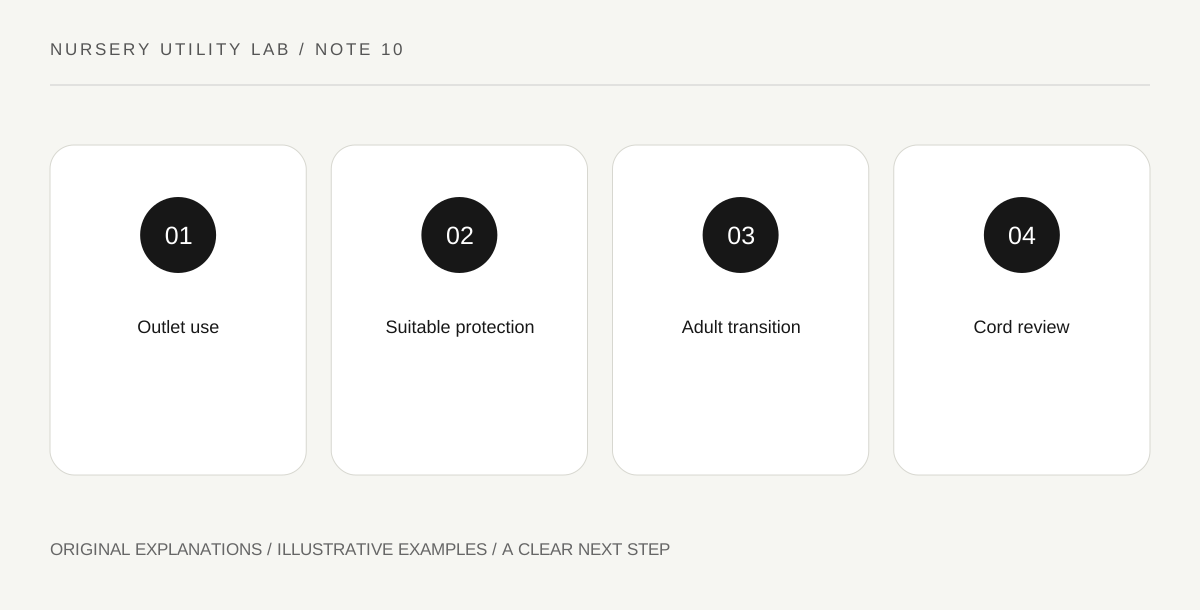
Original explanatory diagram. Read the full method and limitations below.
Map outlets by their real use
Identify unused outlets, occupied outlets and places where chargers are frequently removed. The nursery may change between daytime care and evening use, so review both arrangements. A cover for an unused socket does not answer every question about a plugged-in appliance, its cord or power supply. Keep the child away during the review and avoid dismantling electrical equipment. A damaged or uncertain electrical installation needs qualified professional attention rather than a babyproofing accessory.
Read compatibility before fitting a product
Choose a suitable protection device for the actual outlet design and follow its instructions. Do not force a poorly fitting item into place or use tape to compensate for missing components. CPSC's advice includes ensuring children cannot easily remove covers and avoiding choking-size pieces. That is a selection boundary, not permission to hand the cover to a child as a test. An adult should review the product using its instructions and appropriate guidance.
Plan what happens during adult access
If an adult removes a cover to use a device, the cover needs an inaccessible destination and an appropriate replacement sequence afterward. A small piece left on the changing surface can move into the baby's environment even though it began as safety equipment. Decide how all caregivers will handle that transition. If the arrangement is repeatedly awkward, consider a suitable different protection design with professional advice where necessary instead of abandoning the boundary during busy periods.
Review cords separately
A protected socket does not make a reachable appliance cord appropriate beside a crib or play area. Arrange devices and cords according to relevant product safety guidance, away from child access. Do not create a new trip or pull hazard while trying to hide a cable. Revisit the setup after moving furniture or adding a device. The finished review should describe the outlet protection, the cord route and the unresolved question, rather than simply counting how many plastic caps were purchased.
Illustrative worked example
Illustrative evening routine: A caregiver notices that an outlet cap is routinely placed beside the crib when a lamp is plugged in. The adults revise the arrangement so no loose cap remains accessible and review whether the chosen device suits that frequently used outlet. They address the lamp cord separately. The example does not offer electrical installation instructions or claim that any removable cap guarantees protection.
Questions that come up
Does a socket cover make a damaged outlet usable?
No. A damaged or uncertain electrical installation needs appropriate professional attention. A cover is not an electrical repair.
Should I ask the baby to try removing it?
No. Do not use a child to test a safety device. Select and review suitable equipment according to its instructions and relevant guidance.
References and scope
These sources support the factual background. Examples and exercises are original illustrative teaching material. References do not imply endorsement.
- CPSC: Childproofing devices — Cabinet locks and suitable outlet covers; installation and continued checks.