Keep baby wipes distinct from disinfecting wipes
Similar rectangular packages can hold products meant for very different jobs. A baby-care wipe and a surface disinfecting wipe are not interchangeable. FDA explains that wipes are regulated according to their intended use, so begin with the actual label before placing a package in a changing kit or refill container.
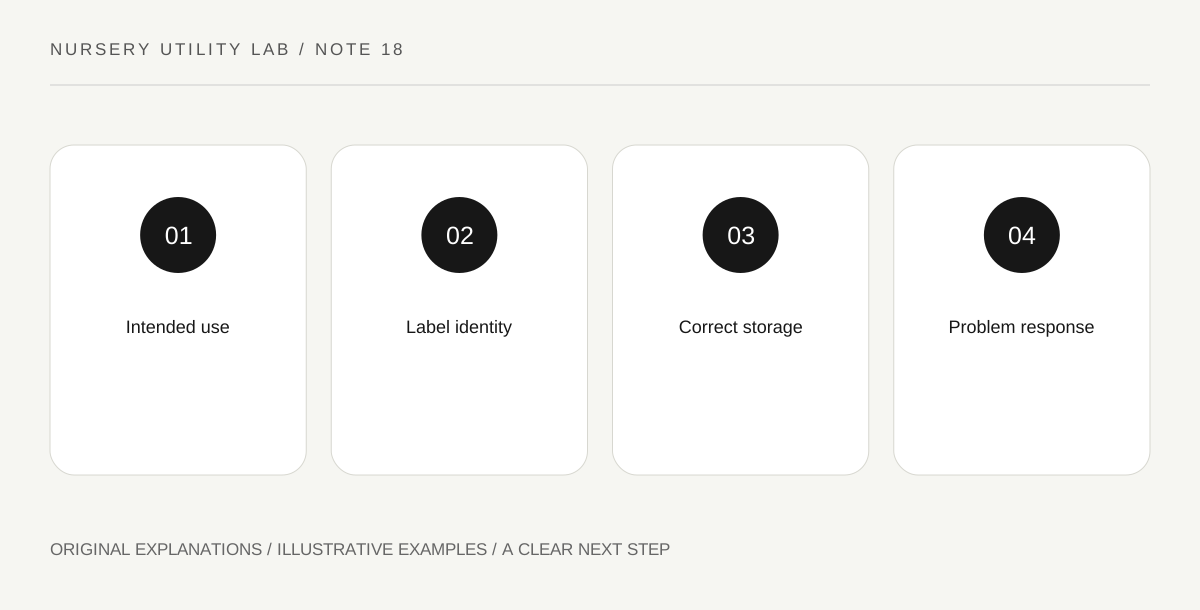
Original explanatory diagram. Read the full method and limitations below.
Identify the intended surface
Read whether the product is intended for skin cleansing, a therapeutic purpose or cleaning inanimate surfaces. FDA distinguishes these categories. Do not infer suitability for a baby's skin from the word gentle on a household-cleaning package. Keep surface-cleaning products separately identifiable so a hurried adult cannot grab the wrong one. A matching pouch or refill box should not erase the information that tells the next caregiver what the product actually is.
Preserve ingredients and directions
Keep the original label or an appropriately accessible record of it. Read use restrictions and relevant ingredient information rather than assuming a water-based description means there are no other ingredients. FDA explains that unscented can include masking fragrance, while fragrance-free should not include added fragrance ingredients. Individual reactions still differ. Questions about a baby's skin needs belong with an appropriate clinician; a packaging term is not a personal allergy assessment or a guarantee that a product will never irritate.
Close and store the actual package correctly
FDA advises keeping containers tightly closed and avoiding temperature extremes that can change the product. Consider where an outing kit or spare package is stored, especially in a vehicle. Do not treat a dried-out wipe as a reason to add an improvised liquid and continue using a product whose condition has changed. Follow the actual instructions for care and disposal. A refill arrangement needs to preserve closure and product identity rather than simply make the nursery shelf look uniform.
Respond to a product problem with useful details
If irritation or another concerning reaction occurs, stop use and obtain appropriate healthcare advice as FDA recommends. Preserve the product and lot information for reporting without delaying needed care. An unusual smell or color also deserves attention rather than being hidden by adding fragrance. Keep the response factual: which product, where used and what was noticed. Do not diagnose an allergy from an online comparison or keep testing the same product on the baby to prove the connection.
Illustrative worked example
Illustrative kit revision: A caregiver notices baby wipes and disinfecting wipes stored in similar unlabeled travel pouches. The adults restore clear product identity, separate their destinations and retain the labels. They also remove a package that has been stored through vehicle temperature extremes for manufacturer advice. The fictional example does not claim that one ingredient list is universally safest or that a label can predict every individual reaction.
Questions that come up
Can a surface disinfecting wipe substitute for a baby wipe?
No. Intended use matters. Choose the appropriate product and follow its actual directions rather than transferring a surface-cleaning purpose to skin.
Does unscented guarantee no fragrance ingredients?
FDA explains that unscented products may contain masking fragrance. Read the actual ingredient label and seek appropriate advice for individual concerns.
References and scope
These sources support the factual background. Examples and exercises are original illustrative teaching material. References do not imply endorsement.
- FDA: Disposable wipes — Different wipe uses, ingredient labels, closed storage and adverse reaction response.