Read the car-seat cleaning page before removing the cover
A spilled drink can make cleaning feel urgent, but a car seat is a safety system with component-specific care limits. Begin with the exact model’s instructions. AAP advises following manufacturer cleaning directions and avoiding extra products that are not supplied or specifically approved for the seat.
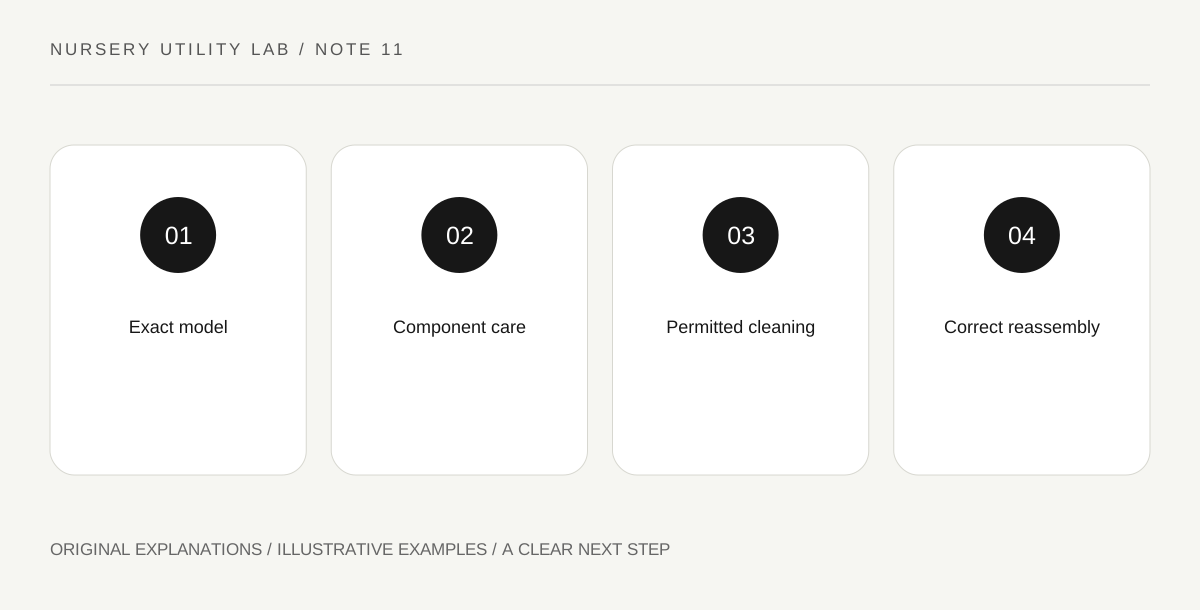
Original explanatory diagram. Read the full method and limitations below.
Identify the seat before the cleaning method
Find the model and its current instructions, then locate the cleaning section for the relevant version. A short social-media demonstration may show a different cover or harness arrangement. Separate the areas that need attention: fabric cover, buckle, straps, shell and other components can have different permissions. The seat's removable appearance does not establish that everything belongs in a washing machine or can be soaked together in a bucket.
Read removal and reassembly as one task
Before taking anything apart, understand how the approved components return to their intended positions. Keep the actual instructions available and use qualified support if the process is unclear. A photograph can supplement your understanding but cannot replace a missing routing instruction. Do not remove components beyond what the manufacturer permits. Planning reassembly before cleaning helps avoid a rushed journey with a cover or restraint that has been returned incorrectly.
Keep products within their permitted role
Use only the cleaning methods and substances allowed for each component. A stronger household cleaner is not automatically better for a car seat, and a pleasant smell does not establish that the material remains suitable. Avoid adding unapproved liners, covers or padding to protect the freshly cleaned seat from the next spill. Those additions introduce a separate compatibility question. Ask the manufacturer about a persistent stain or odor rather than escalating through unverified methods until it disappears.
Plan transport while the seat is unavailable
The cleaning and required drying process can make the seat unavailable for a period. Arrange the family's transport accordingly instead of rushing a damp or incomplete assembly back into use. Before the next journey, confirm the permitted components are correctly installed according to the seat and vehicle instructions. If questions remain, seek manufacturer support or a qualified child-passenger-safety resource. A cleaner appearance is only one result; the important handover is a correctly prepared, suitable seat.
Illustrative worked example
Illustrative spill response: A caregiver locates the exact manual and discovers different care instructions for the cover and harness. They plan a period without travel, clean only as permitted and follow the reassembly directions before use. A suggested universal soaking method is set aside. The fictional example does not establish that a particular detergent, drying time or cleaning technique applies to every car seat.
Questions that come up
Can I wash the harness because the fabric cover is washable?
Do not extend one component’s permission to another. Follow the exact manufacturer’s directions for each part.
Should I add a generic liner to prevent future spills?
AAP advises against extra products unless supplied with the seat or specifically approved by its manufacturer. A protective purpose does not establish compatibility.
References and scope
These sources support the factual background. Examples and exercises are original illustrative teaching material. References do not imply endorsement.
- AAP: Car seats information for families — Follow car-seat manufacturer cleaning directions and avoid unapproved extra products.