Identify infant protective earmuffs before buying headphones
Products worn over a baby’s ears can be hearing protectors, audio headphones or soft winter accessories. Similar cup shapes do not establish the same purpose. Begin with the intended protective function and infant suitability, then plan the environment as well as the product. A quiet-looking baby is not evidence that a noisy setting is safe.
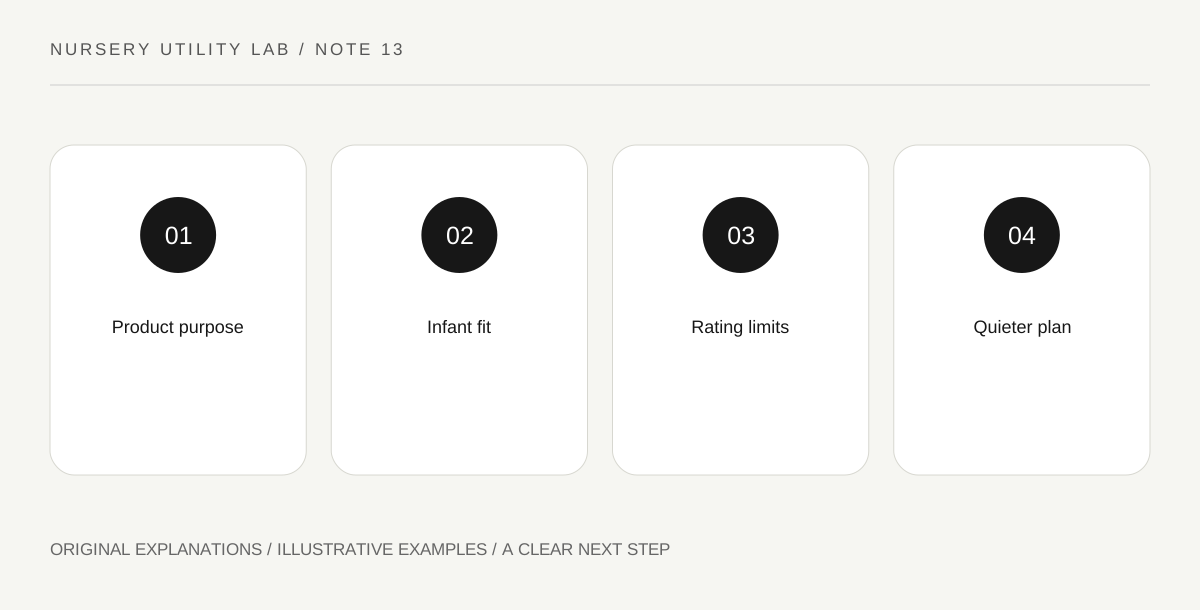
Original explanatory diagram. Read the full method and limitations below.
Read the product’s purpose before the styling
NIDCD describes protective earmuffs as padded cups that cover the ears, with sizes including infants and children. It distinguishes them from soft earmuffs used for warmth. Check the actual manufacturer’s description and instructions instead of assuming a colorful over-ear product is hearing protection. If it plays audio, identify that additional function separately; do not infer protective performance from the word headphones. Keep the model and intended age or fit information available so a caregiver can ask a precise product question.
Check infant fit in a suitable quiet setting
Learn the actual fitting instructions before any outing. The cups need to provide the intended coverage and seal; NIDCD notes that hats and hairstyles can create gaps. A product appropriate for an older sibling may not fit a baby simply because its band adjusts. Ask a pediatric or hearing-health professional about selection when fit or the child’s circumstances are unclear. Do not tighten beyond the instructions or improvise a strap to hold an unsuitable product in position. A calm preparation setting lets the adult read and observe without competing with an event’s noise or pressure to stay.
Keep the rating separate from an exposure guarantee
NIDCD explains that hearing protectors do not block all sound and that proper fitting and wearing affect protection. A noise-reduction rating is product information, not a guarantee that every infant can safely remain beside any loudspeaker. Do not subtract the printed rating from an unverified phone reading and call the result a personalized safe duration. The baby’s apparent sleep, quietness or lack of protest cannot measure the sound reaching the ears. Product selection and the decision about attending an environment remain separate tasks.
Plan a quieter choice and an exit
AAP advises avoiding excessively noisy venues for young children; if they attend, it recommends protective earmuffs, including for young infants. Choose the quieter option before treating equipment as a reason to accept a loud plan. Adults should know where they can leave promptly and what they will do if the product does not fit or remain correctly positioned. An infant cannot manage that decision independently. Keep the plan simple enough that another caregiver understands it without interpreting a review score as a safety approval.
Illustrative worked example
Illustrative purchase check: A family compares a winter accessory, an audio headset and an identifiable infant hearing protector. Only the last is considered for its stated protective purpose. They read its fitting instructions in a quiet place and keep a quieter alternative outing available. The fictional example does not certify a brand, measure sound attenuation, prescribe an exposure duration or treat a sleeping baby as proof of protection.
Questions that come up
Do soft winter earmuffs perform the same job?
No. NIDCD distinguishes protective earmuffs from warmth or fashion accessories. Verify the actual product’s intended function.
Does a high rating make every loud event acceptable?
No. No protector blocks all sound, and fit matters. Follow pediatric guidance about avoiding excessive noise rather than using a rating as unrestricted permission.
References and scope
These sources support the factual background. Examples and exercises are original illustrative teaching material. References do not imply endorsement.
- NIH NIDCD: Protect your child’s hearing — Protective earmuffs, infant and child sizing, complete ear coverage, seal interference, no complete sound blocking and proper use.
- AAP: Excessive noise risks to children — Avoid excessively noisy venues for young children; appropriate protective earmuffs if attending, including young infants; adult occupational thresholds are not infant safety guarantees.