Give pacifiers a clean-to-used separation
A spare pacifier is useful only when a caregiver can tell whether it is clean and still suitable to use. Build a small routine around the actual product’s instructions, condition and storage. The task is managing an item that enters the mouth, rather than collecting as many soothing accessories as possible.
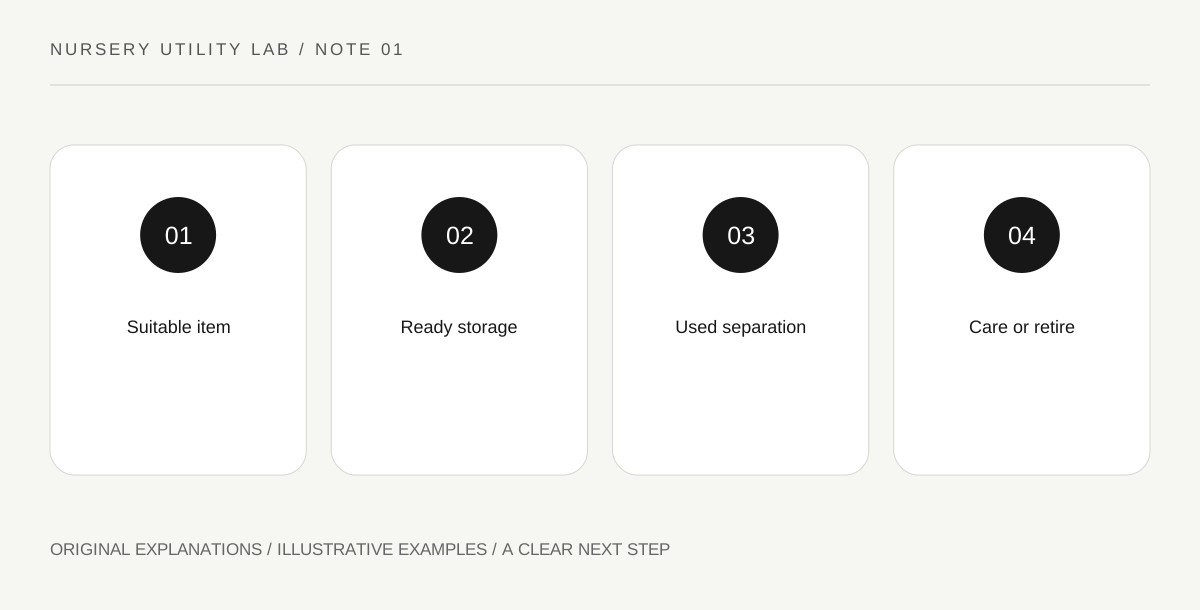
Original explanatory diagram. Read the full method and limitations below.
Choose a verifiable pacifier design
The American Academy of Pediatrics discusses a one-piece model and a shield with air holes, alongside product cleaning and condition checks. Read the current guidance and the actual product’s age and use instructions before buying. A bottle nipple is not an improvised substitute. Keep the packaging long enough to identify the model and contact the company. A reassuring color or a familiar brand name does not describe the condition of the particular item in your hand.
Separate ready items from dropped items
Use a clearly identifiable clean storage arrangement that follows the product instructions. Give a dropped or used pacifier a different destination until it has received appropriate care. This can be as simple as two adult-managed locations rather than an elaborate organizer. The distinction needs to survive a hurried outing: another caregiver should not have to infer cleanliness from whether the pacifier happens to be inside a pouch. Storage containers themselves also need a care plan.
Read the cleaning permissions precisely
Follow the product’s cleaning directions and relevant pediatric guidance. Do not assume that every silicone-looking product can tolerate the same boiling, dishwasher or steam process. Distinguish a compatible cleaning method from an unsupported shortcut. If an instruction is unclear, ask the manufacturer while another suitable pacifier is available. The adult should confirm the item is ready and appropriately cooled before offering it, rather than treating the end of a hot-water process as immediate permission to use it.
Retire damage instead of extending convenience
Pacifiers wear out. Inspect them as instructed and remove damaged or deteriorating items rather than trying glue, tape or an attached household replacement. Do not attach a pacifier to the baby or sleep space with a cord. A lost pacifier may be inconvenient, but preventing that inconvenience does not justify creating an attachment hazard. Keep the replacement route simple enough that an obviously damaged item does not remain in circulation because it is the only familiar one.
Illustrative worked example
Illustrative bag arrangement: A caregiver places ready pacifiers in a cared-for container and keeps a separate adult-managed destination for items dropped during an outing. A second caregiver knows the distinction before leaving. When one pacifier develops visible damage, it is removed instead of returned to either ready compartment. This fictional example describes organization, not a claim that a particular container sanitizes its contents or that a pacifier will suit every baby.
Questions that come up
Does putting a dropped pacifier in its case clean it?
No. A case is storage unless its verified instructions establish a specific care function. Use the appropriate cleaning process before returning it to ready storage.
Can a bottle nipple serve as a spare pacifier?
AAP advises against that substitute because the nipple can separate from its ring and create a choking hazard. Use a suitable pacifier instead.
References and scope
These sources support the factual background. Examples and exercises are original illustrative teaching material. References do not imply endorsement.
- AAP: Pacifiers and thumb sucking — Pacifier design, care and replacement considerations.