Choose a teether without a necklace or medication claim
Teething products can range from simple chewable objects to jewelry and medicinal gels. Those categories do not carry the same hazards or purpose. Begin with the current FDA guidance and a suitable product’s instructions, then make care and condition checks part of the purchase decision.
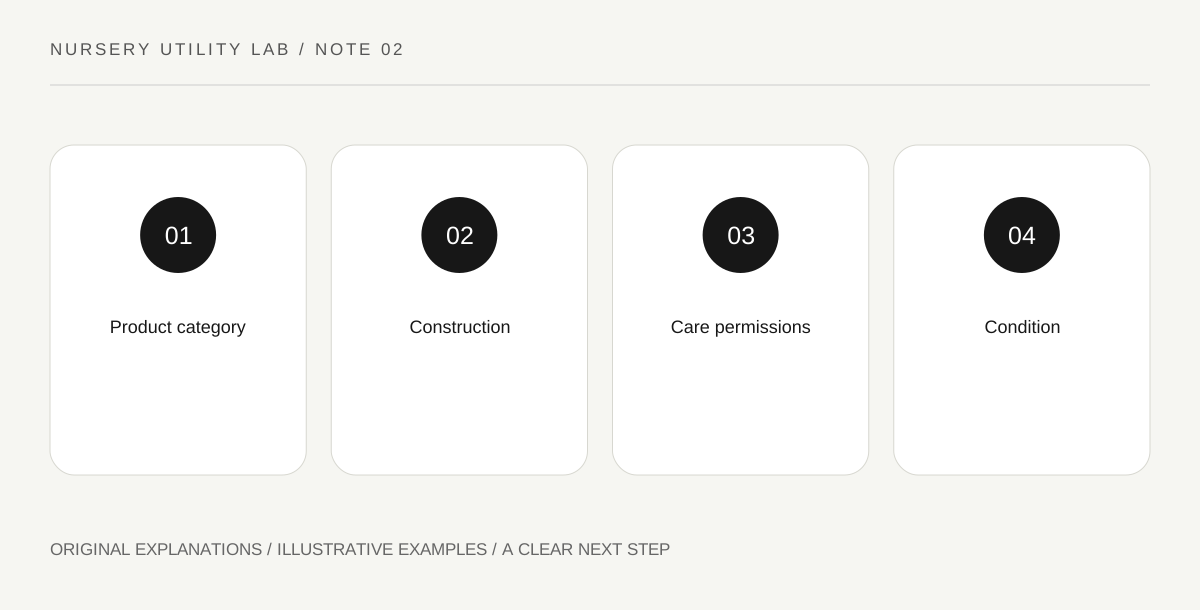
Original explanatory diagram. Read the full method and limitations below.
Separate the object from the promise
FDA warns about choking and strangulation associated with teething jewelry and serious risks from certain topical teething medicines. A necklace’s material story does not answer those hazards. Do not treat an amber or natural label as evidence that a product is appropriate to place around a baby. For concerns about discomfort or medicines, ask the child’s clinician rather than choosing a product because its advertisement offers the most ambitious relief claim.
Read the actual teether construction
FDA describes a firm rubber teether rather than a liquid-filled one and warns against a frozen teething ring. Check the actual item’s instructions, materials and permitted care before use. The freezer icon on an unrelated product does not establish permission for this one. A product that cannot be identified or has unclear directions is an unresolved purchase, even when its shape resembles another item that a family has used successfully.
Make cleaning practical before buying
Ask what the instructions require after the item falls or becomes dirty and whether that process fits your household. Consider crevices, removable parts and the need to dry or cool the item as directed. A single-piece appearance does not eliminate the need for inspection. Keep a route for taking the item out of circulation while it receives care. The baby should not become the test of whether an improvised cleaning method has preserved the material.
Inspect before each return to use
Look for damage, loose components or a change that makes the product differ from its original instructed condition. Retire an unsuitable item rather than tying it to another object to keep it nearby or adding a household handle. Keep the product identity for a manufacturer question. If a baby’s symptoms seem more than ordinary teething discomfort, seek appropriate clinical advice; the presence of a teether should not become an explanation for every new symptom or a reason to delay care.
Illustrative worked example
Illustrative purchase decision: A family is offered a teething necklace as a gift and a separate identifiable firm teether. They explain that they will not use jewelry on the baby, then read the teether’s care instructions and check its condition. They keep it out of use while resolving an unclear cooling instruction. The example claims neither symptom relief nor a medical outcome from the purchase.
Questions that come up
Does natural material make a necklace suitable?
No. A material description does not remove choking or strangulation hazards. FDA warns against teething jewelry for infants and children.
Should I freeze a teething ring for more relief?
FDA advises that the ring should not be frozen. Follow the actual product directions and ask a clinician about concerning symptoms instead of seeking a more extreme cooling effect.
References and scope
These sources support the factual background. Examples and exercises are original illustrative teaching material. References do not imply endorsement.
- FDA: Safely soothing teething pain — Teething jewelry hazards and appropriate teether characteristics.