Choose milk-storage containers by purpose and closure
A container for expressed breast milk needs an appropriate intended use, a reliable closure and a clear identity. Its shape or ounce markings alone do not answer those questions. CDC recommends breast-milk storage bags or clean food-grade containers with tight-fitting lids, while excluding ordinary plastic bags and disposable bottle liners.
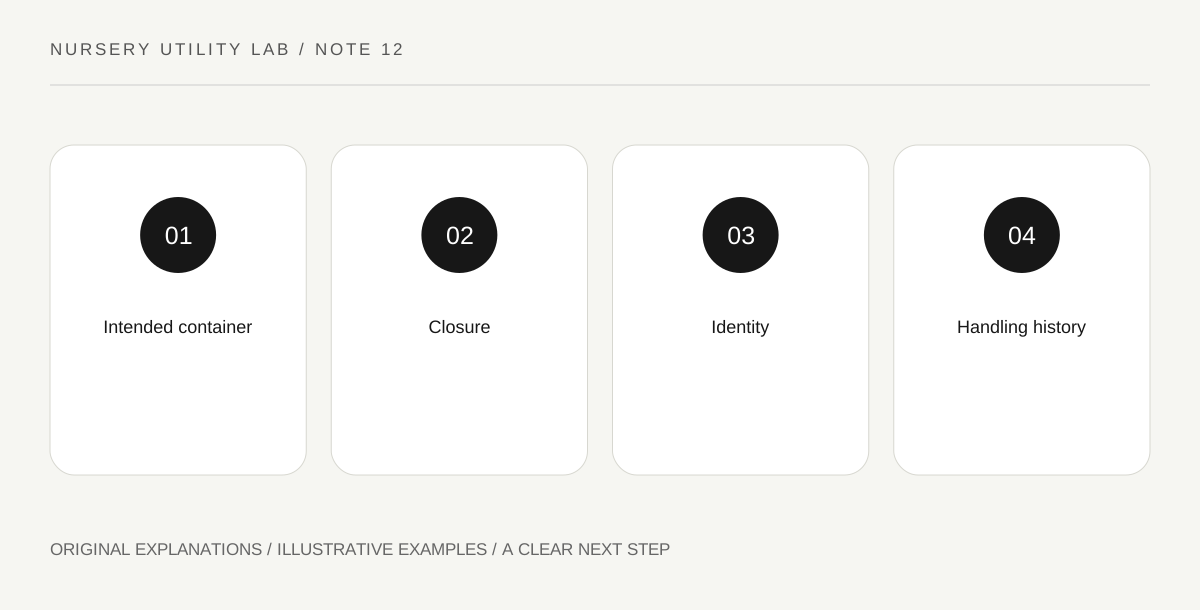
Original explanatory diagram. Read the full method and limitations below.
Read what the container is intended to hold
Check the actual product description and instructions before buying a large supply. A bag sold for carrying snacks or lining a bottle is not automatically a milk-storage bag. For a reusable container, identify the permitted cleaning and storage conditions. Keep the package information so another caregiver can distinguish its purpose from a similar household container. A familiar material name does not establish every temperature or reuse permission for the finished product.
Understand the closure as part of handling
Read how the bag seals or the lid engages and how the container should be supported during filling and storage. Do not assume a closure has engaged because its top looks flat. Follow the actual instructions without inventing a second household fastener or adhesive patch. A damaged closure makes the container unsuitable for continued use. Practical comparison includes whether adults can operate it correctly in the real care setting, not merely whether it stacks attractively in an online photograph.
Make room for identity and expansion
CDC advises labeling expressed milk with its expression date and leaving about an inch of headspace in a container when freezing because milk expands. The exact product may also specify a filling limit. Plan a readable label that does not obscure instructions or rely on a removable cap staying with one container forever. For childcare, include the child's name and confirm the provider's requirements. Keep storage time and temperature guidance available separately rather than trying to fit every rule onto one tiny label.
Use containers within the complete milk-handling plan
A storage bag does not determine whether milk's previous handling was appropriate. Use current CDC guidance for storage, thawing and feeding history, and seek individual clinical advice where needed. Arrange clean containers separately from used ones. When a container leaks or its identity becomes uncertain, do not solve the problem by guessing a date from where it sits in the refrigerator. The useful purchasing question is whether the product supports clear, appropriate handling throughout its intended use.
Illustrative worked example
Illustrative container comparison: A family compares a purpose-made storage bag with a clean food-grade lidded container. They read each product's cleaning or single-use instructions and establish a date-label location. They reject an ordinary disposable bottle liner for storage. The example does not assign storage duration to an unknown handling history or claim that a particular bag shape keeps milk safe without temperature control.
Questions that come up
Can any food bag substitute for a milk-storage bag?
CDC advises using breast-milk storage bags or appropriate clean food-grade containers, not ordinary bags or disposable bottle liners.
Does a clear date prove the milk is still usable?
No. Date is one part of the record. Apply current handling, time and temperature guidance to the milk’s actual history.
References and scope
These sources support the factual background. Examples and exercises are original illustrative teaching material. References do not imply endorsement.
- CDC: Breast milk storage and preparation — Milk storage containers, labels and freezing headspace.